Walk any marina and you’ll see both hanging off transoms and buried under engine hatches. Neither is objectively better — they solve different problems. Here’s how to actually tell which setup fits the way you use your boat.
What sets them apart mechanically
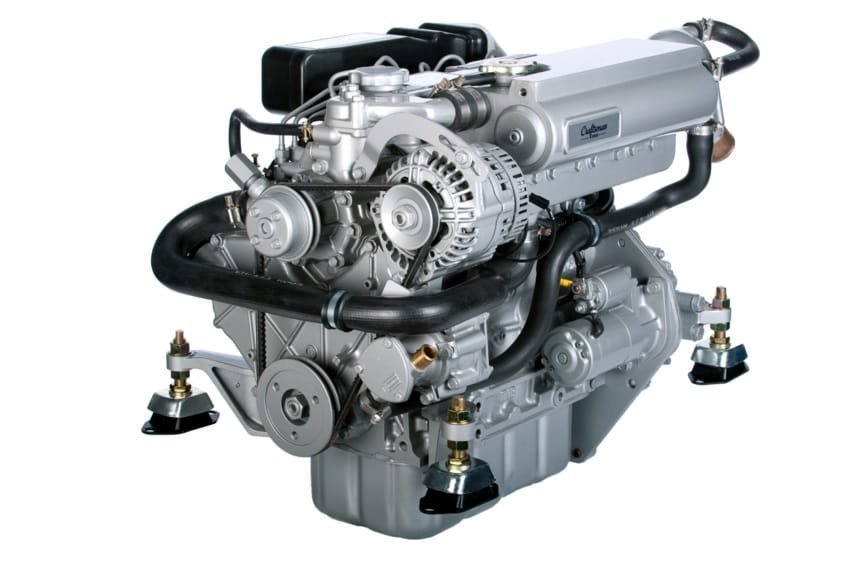
An outboard mounts entirely outside the hull on the transom, self-contained and removable. An inboard mounts inside the hull, connected to the propeller through a fixed shaft angled down through the bottom of the boat. That single difference — inside vs outside the hull — is what drives almost every other tradeoff between them.
Where outboards win
- Shallow water access — the whole motor tilts up out of the water, letting you run skinnier water and beach the boat without grounding the lower unit
- Serviceability — accessible from the back of the boat, often removable entirely for major work, no engine room to climb into
- Weight and efficiency — generally lighter and more fuel-efficient per horsepower on smaller to mid-size hulls
- Deck space — no engine box eating into cockpit or cabin room
This is why fishing boats, center consoles, and most boats under 35 feet default to outboard power.
Where inboards win
- Lower center of gravity — the engine sits low and central in the hull, improving stability in rough water compared to weight hanging off the stern
- Quieter cabin — no engine noise directly behind the transom where people sit or sleep
- Clean transom for wake sports — no outboard disrupting the wake shape, which is exactly why wakeboard and wakesurf boats are almost universally inboard
- Better fit for larger, heavier boats — cruisers and sailboats where hull design and shaft angle are optimized for sustained displacement-speed cruising
The maintenance access question most people underweight
Outboards can be tilted up and serviced dockside, or pulled entirely for major work at a shop without touching the boat’s interior. Inboards require engine room or hatch access — fine for scheduled maintenance, considerably harder if you want to troubleshoot something yourself on short notice mid-trip. If DIY access matters to you, this single factor often outweighs every other consideration on the list.
Fuel efficiency isn’t a simple win for either side
Outboards usually win at cruising speed on smaller, lighter hulls where their weight and efficiency advantage matters most. Inboards can match or beat that on larger, heavier boats where the hull and prop shaft are designed around sustained inboard power — it’s not that one type is inherently more efficient, it’s that each is efficient on the hull sizes it’s typically paired with.
The simple version
Fishing, shallow water, easy DIY servicing, smaller boat → outboard. Wake sports, larger cruisers, cabin comfort and quiet, rough-water stability → inboard.
If you’re leaning outboard, compare options sized to your hull in our outboard motors category, or see our inboard marine engines if a cruiser or wake boat setup fits better.