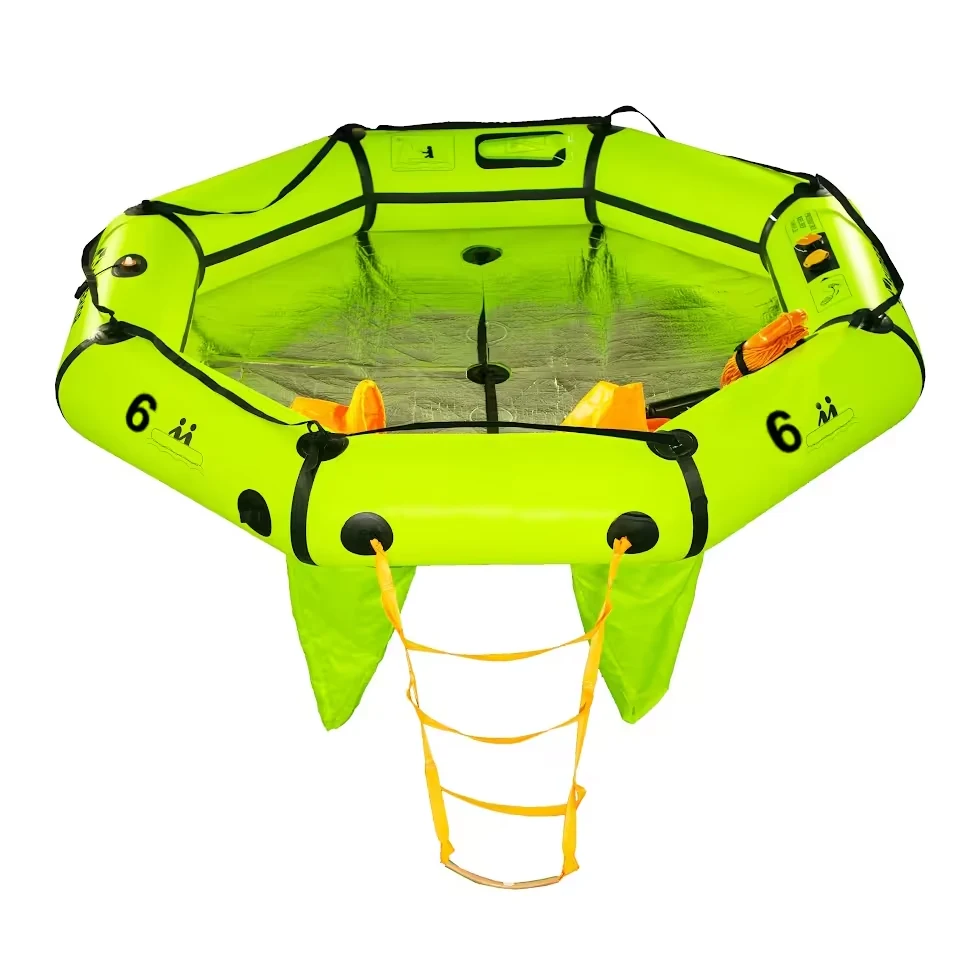
A life raft is the one piece of gear on your boat you hope never earns its price. That’s exactly why getting the spec, capacity, and service schedule right the first time matters more than almost anything else you’ll buy.
Capacity: size for your worst day, not your average one
Buy for your maximum possible crew count, not your typical trip. A 4-person raft carrying exactly 4 adults in real survival conditions — gear, waves, exposure — is genuinely cramped. If you occasionally carry guests beyond your usual crew, size up rather than assuming you’ll never need the extra capacity on the one trip it matters.
Canister vs valise — this decision changes how it deploys
- Canister (hard case) — permanently mounted on deck in a cradle, deploys automatically via a hydrostatic release if the boat sinks out from under it, no crew action required. Standard for offshore and commercial vessels.
- Valise (soft bag) — stored in a locker, lighter and less expensive, but must be manually retrieved and thrown overboard by a crew member. If no one’s able to grab it, it doesn’t deploy.
Offshore, solo, or short-handed sailors should lean canister specifically for the automatic release — it works even if you’re incapacitated or the boat goes down fast. Coastal cruisers with quick, reliable locker access often choose valise for the lower cost and flexible storage.
Certification — don’t assume “life raft” means certified
- SOLAS-rated — required for commercial vessels, exceeds recreational standards
- ISO 9650 — the recreational standard (Type I for offshore passages, Type II for coastal use)
Uncertified rafts exist at lower prices and lack the build quality that certification requires — double buoyancy tubes, proper ballast bags for stability, a functional canopy. In survival conditions, these aren’t extras.
Mounting location matters as much as the raft itself
Mount where it’s accessible without going below deck and where it won’t be trapped under other gear in an emergency. Canister rafts need clear space for the hydrostatic release to actually deploy the raft, not just release the canister.
The service schedule is not optional — and it’s a recurring cost
Life rafts need professional repacking and inspection on a schedule set by the manufacturer, typically every 1–3 years, more frequently as the raft ages. An unserviced raft can fail to inflate correctly, have a degraded CO2 cartridge, or have a compromised fabric seal — problems invisible from the outside. Factor this ongoing cost into your decision before buying; a cheaper raft with expensive, frequent servicing can cost more over its life than a pricier one with a longer service interval.
Check it’s actually within reach in an emergency
Practice locating and, if it’s a valise, actually lifting and carrying it — some are heavier than people expect until they try. Knowing the deployment steps ahead of time, not reading them off the canister in a real emergency, is what makes the difference.
Compare capacity and certification options in our life rafts category.