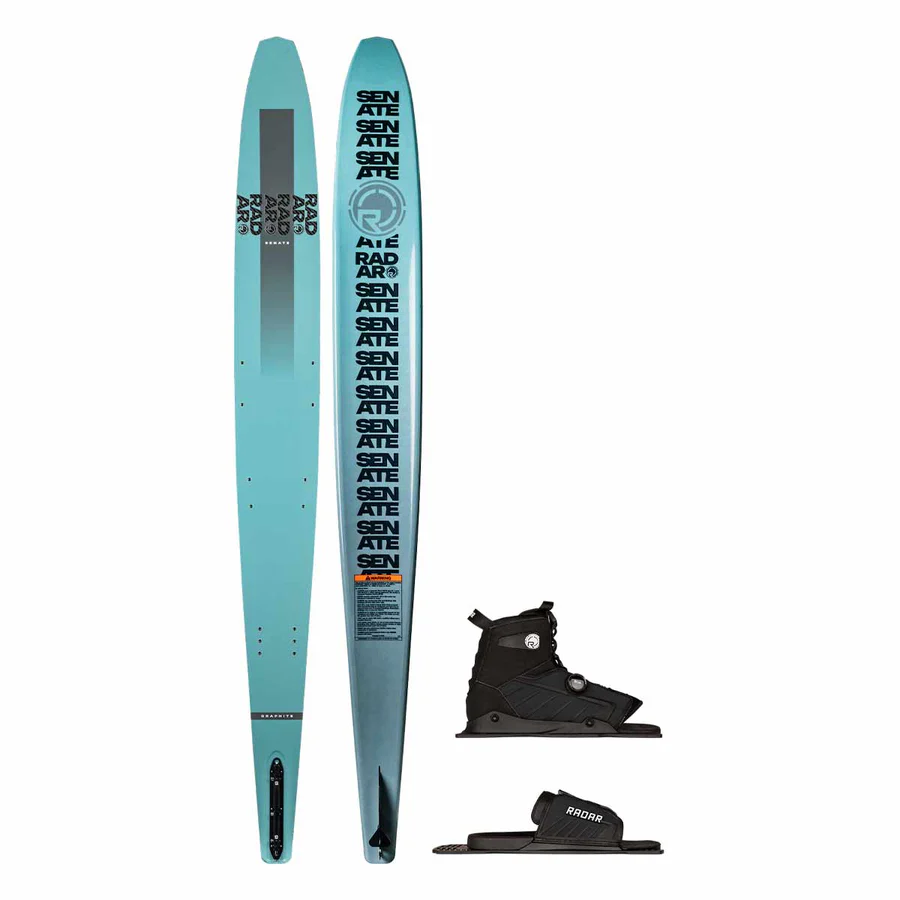
Get ski length wrong and you’ll spend your whole session fighting the water instead of skiing on top of it. The right size comes down to two numbers most people never actually check: your weight and your realistic boat speed.
Sizing chart: weight to length
- Under 120 lbs → 63–64″
- 120–150 lbs → 65–66″
- 150–180 lbs → 67″
- 180–200 lbs → 68″
- 200+ lbs → 69″+
These are starting points, not absolutes — speed shifts them in a predictable direction.
Speed changes what size actually works
Consistently skiing above 34 mph? Size down one length — the extra speed generates more lift than a longer ski needs, and an oversized ski at high speed gets unstable and bouncy. Skiing under 26 mph, common for kids, beginners, or casual recreational speeds? Size up for the extra stability a slower ski needs to stay up out of the water.
Why beginners should size up from the chart, not down
A wider, longer ski than the standard chart suggests is dramatically more forgiving while you’re learning the actual mechanics of getting up — more surface area means more stability at the low speeds beginners typically ski. Trying to learn on a ski sized for your eventual skill level, rather than your current one, is one of the most common reasons people struggle to ever get up consistently. Size down once you’re getting up reliably, not before.
Flat bottom vs concave — pick based on where you are, not where you want to be
- Flat bottom — more stable and forgiving at slower speeds, easier to learn balance on
- Concave (tunnel) bottom — holds an edge better at speed, preferred once you’re carving hard turns and want more responsiveness
The starting position that actually gets people up
Knees bent to your chest, ski tips pointed up and toward the boat, arms straight (not bent) holding the handle. Let the boat’s acceleration do the work of lifting you — trying to stand up early, before the ski has enough speed to plane, is the single biggest reason people get pulled forward off balance on the first attempt.
Fin setup — don’t touch it yet
Stock fin depth and angle work fine for the vast majority of riders. Fin adjustments change how “loose” or “locked-in” the ski feels and are something experienced slalom skiers fine-tune for course work — not something a new or intermediate skier needs to worry about. Get comfortable on the ski as-is before considering any adjustment.
Getting up consistently, not just occasionally
If you’re getting up sometimes but not consistently, the size is usually right and the issue is technique — most commonly, standing up too early or letting your arms bend under the initial pull. Fix the position before changing equipment.
Browse our water skis to find the right length and bottom shape for where you’re starting.