
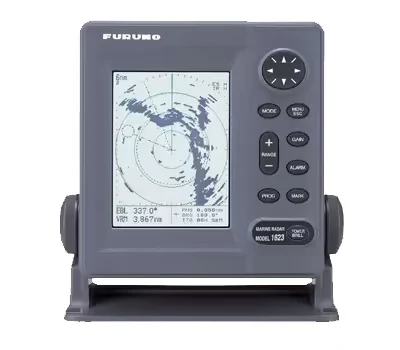
You flip on the radar, and the screen fills with blips, smears, and fuzzy blobs that could be a boat, a rain cell, or nothing at all. Radar rewards people who learn to read it and quietly ignores everyone who doesn’t. Here’s what the picture is actually telling you.
Solid dots vs smears vs fuzzy patches
A sharp, well-defined return is usually a hard target — another vessel, a buoy, or land. A large, soft-edged, shifting patch is almost always weather — rain or squall cells show up as diffuse blobs that change shape between sweeps, unlike a boat, which stays roughly the same size and shape as it moves.
Range matters more than most people think
Running on too long a range hides small targets in the clutter and makes it hard to judge closing speed with nearby vessels. Running too short a range means you miss approaching weather or traffic until it’s already close. Most experienced radar users switch ranges constantly — short range for close-quarters traffic and docking areas, longer range to scan for approaching weather or vessels earlier.
Gain, sea clutter, and rain clutter — the three dials that change everything
- Gain controls overall sensitivity. Too low and you miss real targets; too high and the whole screen fills with speckled noise.
- Sea clutter filters out the return from waves near the boat — essential in rough water, but overdo it and you’ll filter out small boats too.
- Rain clutter reduces the smearing effect from precipitation so you can still pick out solid targets inside a rain cell.
The mistake most new radar users make is leaving all three on default and wondering why the picture looks messy — these need adjusting for current conditions, not set once and forgotten.
Radar vs AIS — why serious boaters run both
Radar shows you everything reflecting a signal back, including boats without AIS transponders, landmasses, and weather. AIS shows you identified vessels with speed, heading, and name — but only vessels broadcasting it, which excludes small craft and anything with a disabled or absent transponder. Radar catches what AIS misses; AIS identifies what radar can only show as an anonymous blip. For the full comparison, see our guide on radar vs AIS.
Using radar to track another vessel’s course
Watch a target over several sweeps rather than reacting to a single position. If a target’s bearing to your boat stays constant while the range decreases, you’re on a collision course — this is one of the most useful, and most overlooked, radar reading skills for open-water navigation.
Solid-state vs magnetron — why your friend’s radar looks cleaner
Older magnetron radars need a warm-up period and typically show more clutter at close range. Newer solid-state radar starts instantly and generally resolves close targets more clearly, which is why two radars on similar boats can produce noticeably different pictures of the same water. See our breakdown on radome vs open array and solid-state vs magnetron if you’re comparing units.
Ready to upgrade or install your first unit? Compare options in our marine radars category.