
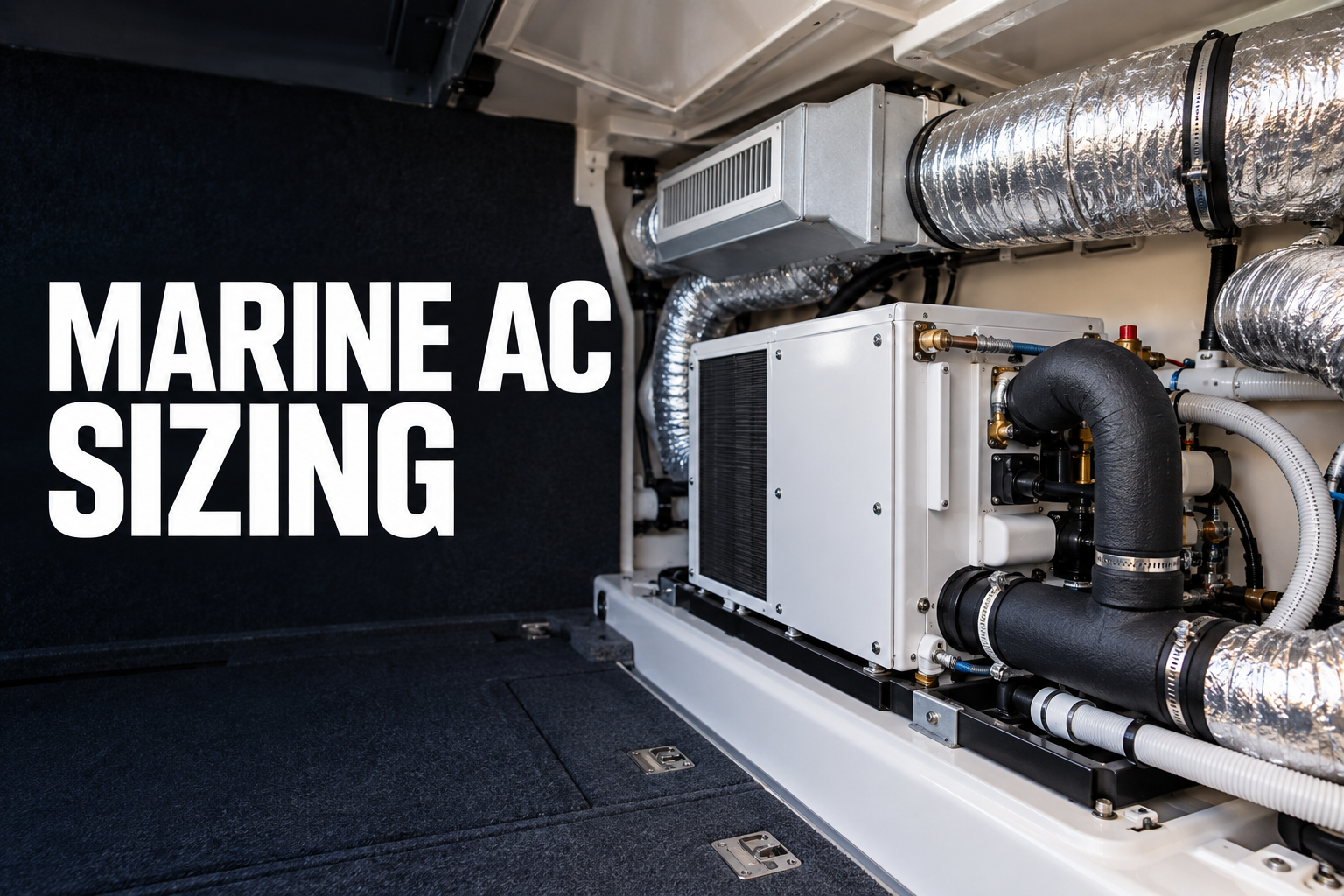
marine air conditioner sizing is a practical search because buying, installation and troubleshooting decisions are connected. This guide focuses on specifications that can be verified, safe checks an owner can perform, and the point where the exact manufacturer manual or a qualified marine technician should take over.
BTU and cabin heat load
Boat air-conditioning capacity cannot be selected by floor area alone. Solar gain through windows, poor insulation, machinery heat, tropical water and frequent door opening can materially increase load. For this part of the decision, record the exact model, vessel configuration and operating conditions rather than relying on a generic maximum figure. Compare like-for-like specifications and document the result so later changes can be diagnosed.
Tropical versus temperate use
Boat air-conditioning capacity cannot be selected by floor area alone. Solar gain through windows, poor insulation, machinery heat, tropical water and frequent door opening can materially increase load. For this part of the decision, record the exact model, vessel configuration and operating conditions rather than relying on a generic maximum figure. Compare like-for-like specifications and document the result so later changes can be diagnosed.
Installation quality, voltage, corrosion, load and maintenance history can change real performance. A component that is correctly specified but poorly installed may perform worse than a simpler system fitted and commissioned correctly.
Single versus multiple zones
Boat air-conditioning capacity cannot be selected by floor area alone. Solar gain through windows, poor insulation, machinery heat, tropical water and frequent door opening can materially increase load. For this part of the decision, record the exact model, vessel configuration and operating conditions rather than relying on a generic maximum figure. Compare like-for-like specifications and document the result so later changes can be diagnosed.
Power and seawater requirements
Boat air-conditioning capacity cannot be selected by floor area alone. Solar gain through windows, poor insulation, machinery heat, tropical water and frequent door opening can materially increase load. For this part of the decision, record the exact model, vessel configuration and operating conditions rather than relying on a generic maximum figure. Compare like-for-like specifications and document the result so later changes can be diagnosed.
Marine Air Conditioner Sizing Guide: Calculate the Right BTU: checklist
- Measure each conditioned space.
- Record window area and sun exposure.
- Confirm voltage and frequency.
- Check seawater pump capacity.
- Provide return-air and service clearance.
Common mistakes to avoid
Do not select equipment from one headline specification, assume all connectors imply compatibility, or ignore loaded vessel weight and operating environment. Confirm voltage, dimensions, required accessories, warranty conditions and regional support before ordering. For safety-critical equipment, preserve a backup and test the complete installation under realistic conditions.
Check specifications, availability and compatibility for your vessel.
Frequently asked questions
Can an oversized unit cool faster?|It may short-cycle, control humidity poorly and add unnecessary electrical load.
Can one unit cool several cabins?|Only with properly designed duct capacity, return air and zoning.
Need model-specific help? Contact VIMARINES with the equipment model, boat type, voltage, installation details and intended use.