
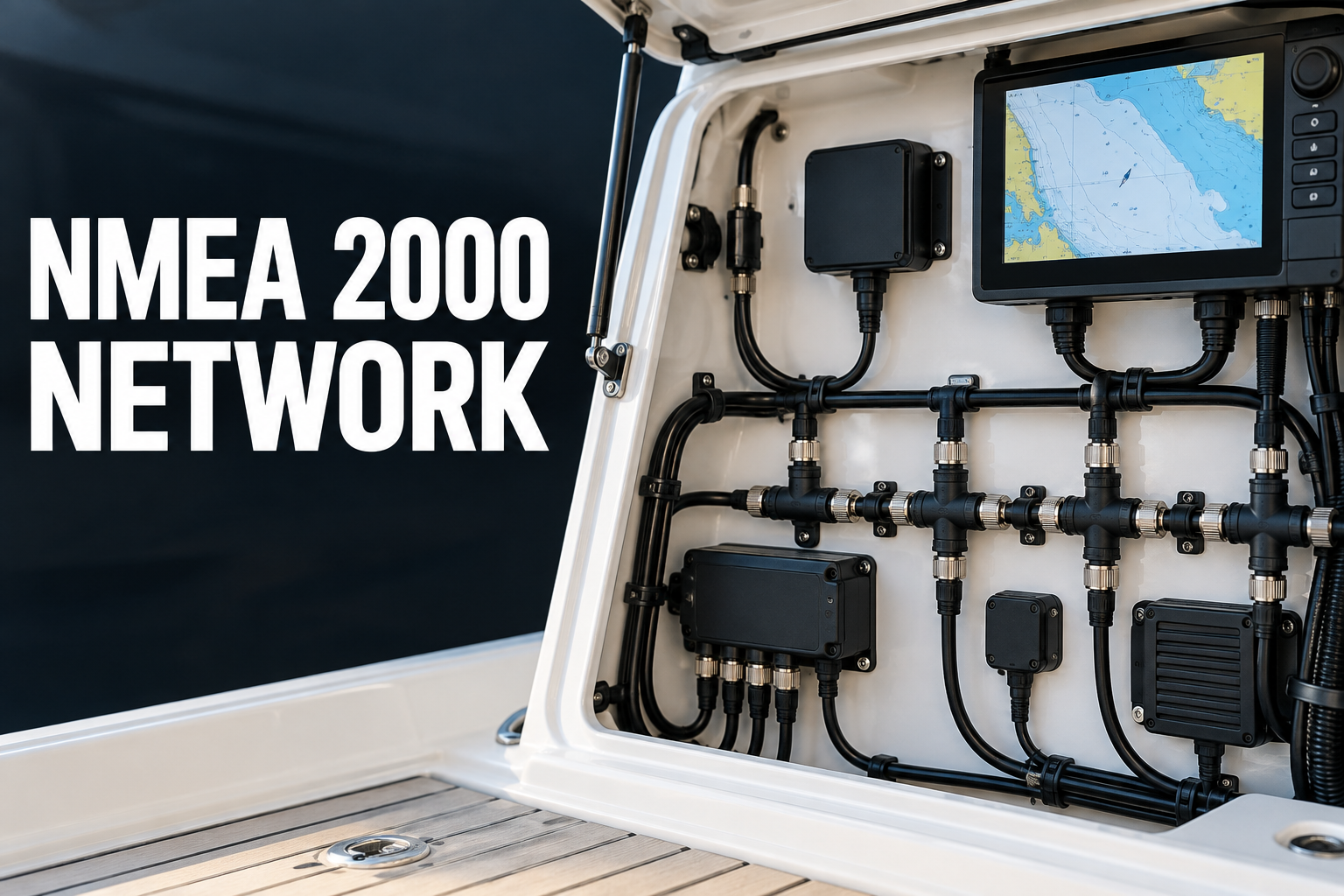
NMEA 2000 explained is a practical search because buying, installation and troubleshooting decisions are connected. This guide focuses on specifications that can be verified, safe checks an owner can perform, and the point where the exact manufacturer manual or a qualified marine technician should take over.
Backbone, drops and terminators
NMEA 2000 uses a powered backbone with one terminator at each end and short drop cables to devices. Reliable installations follow topology and power rules rather than connecting cables wherever convenient. For this part of the decision, record the exact model, vessel configuration and operating conditions rather than relying on a generic maximum figure. Compare like-for-like specifications and document the result so later changes can be diagnosed.
Power insertion and voltage drop
NMEA 2000 uses a powered backbone with one terminator at each end and short drop cables to devices. Reliable installations follow topology and power rules rather than connecting cables wherever convenient. For this part of the decision, record the exact model, vessel configuration and operating conditions rather than relying on a generic maximum figure. Compare like-for-like specifications and document the result so later changes can be diagnosed.
Installation quality, voltage, corrosion, load and maintenance history can change real performance. A component that is correctly specified but poorly installed may perform worse than a simpler system fitted and commissioned correctly.
Device instances and data sources
NMEA 2000 uses a powered backbone with one terminator at each end and short drop cables to devices. Reliable installations follow topology and power rules rather than connecting cables wherever convenient. For this part of the decision, record the exact model, vessel configuration and operating conditions rather than relying on a generic maximum figure. Compare like-for-like specifications and document the result so later changes can be diagnosed.
Network troubleshooting
NMEA 2000 uses a powered backbone with one terminator at each end and short drop cables to devices. Reliable installations follow topology and power rules rather than connecting cables wherever convenient. For this part of the decision, record the exact model, vessel configuration and operating conditions rather than relying on a generic maximum figure. Compare like-for-like specifications and document the result so later changes can be diagnosed.
NMEA 2000 Explained: Plan a Reliable Marine Electronics Network: checklist
- Use certified compatible components.
- Install exactly two terminators.
- Power the backbone at an appropriate point.
- Stay within cable and current limits.
- Document every device and connection.
Common mistakes to avoid
Do not select equipment from one headline specification, assume all connectors imply compatibility, or ignore loaded vessel weight and operating environment. Confirm voltage, dimensions, required accessories, warranty conditions and regional support before ordering. For safety-critical equipment, preserve a backup and test the complete installation under realistic conditions.
Check specifications, availability and compatibility for your vessel.
Frequently asked questions
Can NMEA 2000 devices from different brands work together?|Often yes for standard messages, but proprietary features may remain brand-specific.
Can a device connect at the end without a terminator?|The backbone ends require terminators; devices connect through approved drops.
Need model-specific help? Contact VIMARINES with the equipment model, boat type, voltage, installation details and intended use.