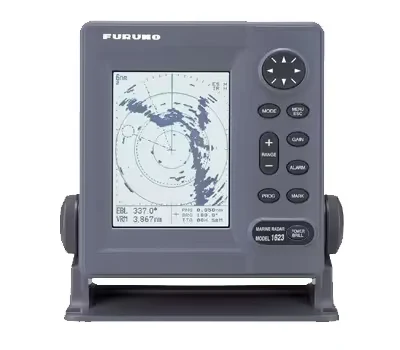
Marine radar vs AIS is the wrong question if it assumes one system can replace the other. Radar detects reflected energy from objects around the boat. AIS receives digitally broadcast vessel information. One can reveal a target that does not transmit AIS; the other can identify a transmitting vessel by name and report its course and speed.
Marine radar vs AIS comparison
| Capability | Radar | AIS |
|---|---|---|
| Detects non-transmitting targets | Yes, when the target produces a usable radar return | No |
| Provides vessel identity | Usually no | Yes, when correctly transmitted |
| Shows land, rain or navigation structures | Often yes | No |
| Depends on target equipment and data | No AIS transmitter required | Yes |
| Typical calculations | Bearing, range and tracked motion | CPA/TCPA from broadcast position, course and speed |
What radar can see
Radar transmits radio-frequency energy and listens for reflections. It may detect coastlines, buoys, squalls and vessels, including targets without AIS. Performance depends on antenna height, scanner type, sea state, rain, target material, tuning and operator interpretation.
Small, low or poorly reflective objects can still be difficult to detect. Radar supplements a proper visual and audible lookout; it does not remove that responsibility.
What AIS contributes
The U.S. Coast Guard describes AIS as a VHF-band shipboard broadcast system. A compatible display can show identity, position, course, speed and other transmitted data. CPA and TCPA calculations can help the operator recognize developing traffic situations.
AIS information can be missing, delayed or entered incorrectly. Not every recreational boat carries a transmitting unit, and some targets are too small or not required to transmit. That is why AIS should not be treated as a complete detection system.
AIS receiver or transceiver?
- Receiver: displays other AIS-equipped vessels but does not broadcast your boat.
- Transceiver: receives targets and broadcasts your vessel data when correctly installed and configured.
Check local licensing, MMSI and carriage rules before installation, especially when operating internationally.
Integration checklist
- Confirm the chartplotter can display the chosen AIS data.
- Plan NMEA 2000, NMEA 0183 or Ethernet connections and data speeds.
- Install antennas and splitters only as specified by their manufacturers.
- Set collision alarms deliberately to avoid constant nuisance alerts.
- Learn radar range, gain, sea clutter and rain clutter controls before relying on them.
- Cross-check visual observations, chart, radar and AIS rather than trusting a single source.
Real-world operating scenarios
In fog, radar may reveal a coastline, rain cell or vessel that is not transmitting AIS, while AIS can attach a name and motion data to a cooperating ship. Near a busy harbor, AIS identity can help with a clear VHF call, while short-range radar tuning helps reveal smaller local traffic. Offshore, longer ranges support early awareness, but close-range checks remain essential because the immediate collision risk can be hidden by a display set too far out.
At night in a quiet anchorage, neither system replaces an anchor watch or visual check. AIS alarms may ignore non-transmitting boats, and radar guard zones can produce false or missed alerts depending on sea clutter, rain and tuning.
Alarm setup and target tracking
CPA and TCPA alarms should match boat speed, stopping distance and traffic density. Settings that are too broad cause constant alerts and alarm fatigue; settings that are too narrow provide little reaction time. Practice acquiring radar targets and compare their calculated motion with AIS and visual bearings in clear weather before depending on the system in poor visibility.
What to record before ordering
List chartplotter model, available network ports, power capacity, mast or hardtop dimensions, cable route and intended antenna height. For AIS, confirm receiver versus transceiver, class, GPS source, VHF antenna arrangement and MMSI requirements. For radar, confirm scanner compatibility, mounting clearance and safe separation specified in the manual.
Compare radar equipment and verify display, network and power compatibility.
Frequently asked questions
Does AIS replace radar?
No. AIS only reports participating transmitters, while radar can detect many non-AIS objects. Each has limitations.
Can radar identify a ship by name?
Radar alone generally shows a return and tracked motion, not identity. AIS can associate a transmitted identity with a target.
Which should I buy first?
The answer depends on operating area, visibility, traffic, boat size, budget and existing electronics. A qualified installer or navigation professional can assess the complete system.
Related: compare scanners in our marine radar buying guide.
Sources: USCG AIS Overview; NOAA Nautical Charts.