
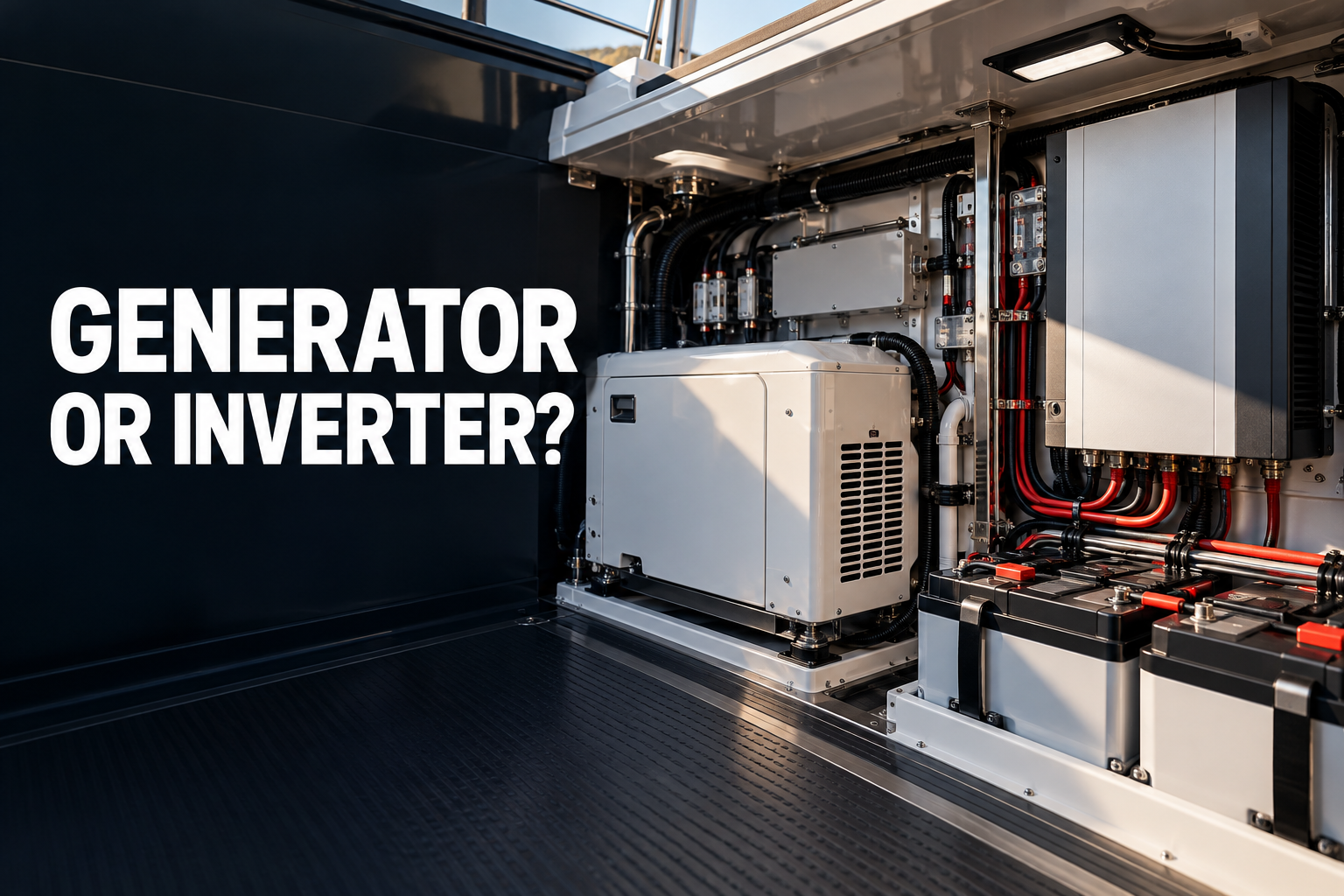
marine generator vs inverter is a practical search because buying, installation and troubleshooting decisions are connected. This guide focuses on specifications that can be verified, safe checks an owner can perform, and the point where the exact manufacturer manual or a qualified marine technician should take over.
Continuous load and surge
An inverter supplies AC from batteries; a generator creates electrical power from fuel. Small intermittent loads may suit an inverter, while long-duration air conditioning and high loads can justify a generator or hybrid design. For this part of the decision, record the exact model, vessel configuration and operating conditions rather than relying on a generic maximum figure. Compare like-for-like specifications and document the result so later changes can be diagnosed.
Battery-bank implications
An inverter supplies AC from batteries; a generator creates electrical power from fuel. Small intermittent loads may suit an inverter, while long-duration air conditioning and high loads can justify a generator or hybrid design. For this part of the decision, record the exact model, vessel configuration and operating conditions rather than relying on a generic maximum figure. Compare like-for-like specifications and document the result so later changes can be diagnosed.
Installation quality, voltage, corrosion, load and maintenance history can change real performance. A component that is correctly specified but poorly installed may perform worse than a simpler system fitted and commissioned correctly.
Fuel, noise and maintenance
An inverter supplies AC from batteries; a generator creates electrical power from fuel. Small intermittent loads may suit an inverter, while long-duration air conditioning and high loads can justify a generator or hybrid design. For this part of the decision, record the exact model, vessel configuration and operating conditions rather than relying on a generic maximum figure. Compare like-for-like specifications and document the result so later changes can be diagnosed.
Hybrid operating strategy
An inverter supplies AC from batteries; a generator creates electrical power from fuel. Small intermittent loads may suit an inverter, while long-duration air conditioning and high loads can justify a generator or hybrid design. For this part of the decision, record the exact model, vessel configuration and operating conditions rather than relying on a generic maximum figure. Compare like-for-like specifications and document the result so later changes can be diagnosed.
Marine Generator vs Inverter: Which Power System Fits Your Boat?: checklist
- List simultaneous AC loads.
- Estimate daily energy, not just peak watts.
- Include inverter and charging losses.
- Check motor starting demand.
- Plan safe ventilation and protection.
Common mistakes to avoid
Do not select equipment from one headline specification, assume all connectors imply compatibility, or ignore loaded vessel weight and operating environment. Confirm voltage, dimensions, required accessories, warranty conditions and regional support before ordering. For safety-critical equipment, preserve a backup and test the complete installation under realistic conditions.
Check specifications, availability and compatibility for your vessel.
Frequently asked questions
Can an inverter run marine air conditioning?|Possibly, but battery capacity, surge, runtime and recharge requirements can be substantial.
Does a generator charge batteries efficiently?|Only with a properly sized charger and useful loading strategy.
Need model-specific help? Contact VIMARINES with the equipment model, boat type, voltage, installation details and intended use.