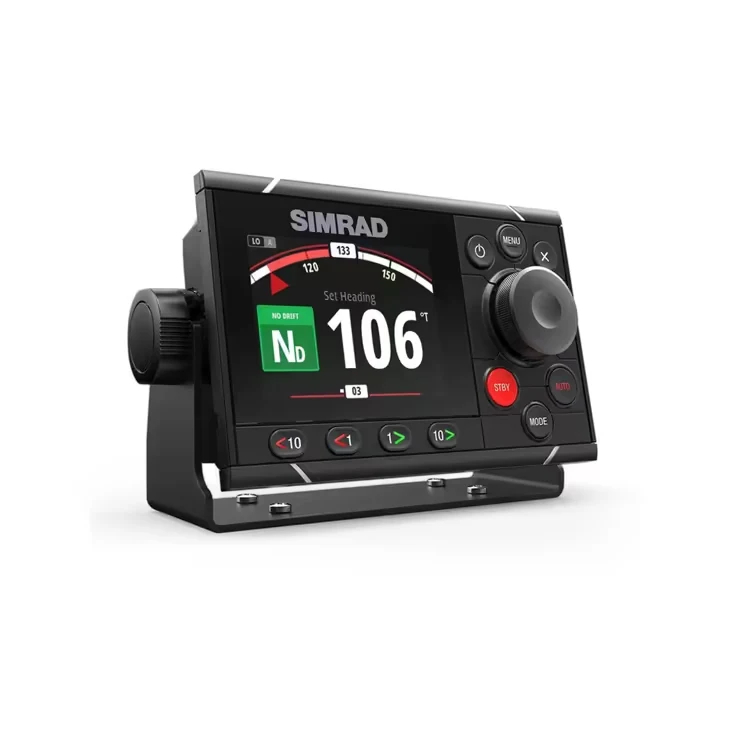
This marine autopilot buying guide starts with the steering system, not the control screen. Hydraulic cylinder volume, mechanical drive type, vessel displacement, steering pressure and electronic network determine which corepack and drive can control the boat safely.
Marine autopilot buying guide: system components
A typical system contains a heading sensor or course computer, a control interface, a drive or hydraulic pump, power electronics and network connections. GPS, wind, rudder-angle and speed data may add functionality, but they do not correct an undersized drive.
Match the autopilot to steering type
| Steering type | Selection data | Typical drive approach |
|---|---|---|
| Hydraulic | Total cylinder volume, pressure and balanced/unbalanced configuration | Correctly sized reversible or constant-running pump |
| Mechanical wheel | Vessel displacement, quadrant/cable arrangement and available mounting geometry | Linear, rotary or wheel drive |
| Tiller | Boat displacement and tiller geometry | Tiller drive within its rated limit |
| Steer-by-wire | Exact engine and digital steering system | Compatible digital interface/corepack |
| Solenoid | Valve voltage, current and steering characteristics | Compatible solenoid control system |
Hydraulic pump sizing
Raymarine’s selection guidance uses the hydraulic steering ram capacity to match a pump. With dual rams plumbed in parallel, total cylinder capacity may need to include both. Garmin similarly asks for total cylinder volume, pressure characteristics and balanced or unbalanced configuration.
An incorrectly sized pump can steer too aggressively, respond slowly or damage components. Use the cylinder model and steering documentation instead of estimating from boat length alone.
Sailboat displacement and drive load
Mechanical sailboat drives are normally rated by maximum laden displacement. Use realistic cruising displacement, including fuel, water, stores and equipment. If the calculated value is near the drive limit, manufacturer guidance commonly favors the next appropriate size.
Network and display compatibility
Confirm how heading, route, speed and wind data enter the system. NMEA 2000 support improves interoperability, but proprietary features may require matching equipment. List the exact chartplotter, heading sensor, drive, engine control and existing autopilot components before ordering.
Safety and commissioning
- Maintain a continuous watch; an autopilot does not navigate or avoid hazards by itself.
- Keep the standby/manual override immediately accessible.
- Install the heading sensor away from magnets, speakers, large conductors and moving metal.
- Bleed hydraulic systems completely and inspect for leaks.
- Complete dockside and sea-trial calibration under the manufacturer’s procedure.
- Test heading hold, turns and manual takeover at safe speeds and in open water.
A practical selection workflow
- Photograph the steering cylinder, helm pump or mechanical linkage labels.
- Find the cylinder volume, vessel displacement and steering specifications in official documents.
- Use the autopilot manufacturer’s current compatibility tool to choose drive and corepack.
- Check the boat’s DC voltage, peak drive current, cable run and breaker requirements.
- Confirm which control head, heading sensor and network parts are included.
- Have the full list reviewed by the installer before ordering individual components.
Autopilot performance problems to anticipate
Air in hydraulic lines can make steering spongy and prevent clean calibration. Magnetic interference can create heading error. A weak power supply may cause resets when the pump starts. Poorly tuned response can produce wandering or excessive wheel movement. These symptoms need systematic installation and commissioning checks rather than immediately replacing the control head.
Sea conditions also affect behavior. A setting that tracks efficiently in calm water may steer aggressively in following seas. Learn how to disengage instantly and adjust response within the manufacturer guidance.
Have steering type, cylinder model, displacement and existing network details ready.
Frequently asked questions
Can boat length alone select an autopilot?
No. Steering type, cylinder volume or vessel displacement and intended use are essential inputs.
Can I install a hydraulic autopilot myself?
Only if you have the required marine hydraulic, electrical and commissioning expertise. Incorrect installation can affect steering safety; professional installation is strongly recommended.
Does an autopilot replace a helmsman?
No. The operator remains responsible for lookout, navigation and immediate control of the vessel.
Plan the whole helm: read our chartplotter guide and radar vs AIS comparison.
Sources: Garmin steering compatibility guide; Raymarine hydraulic drive guide.